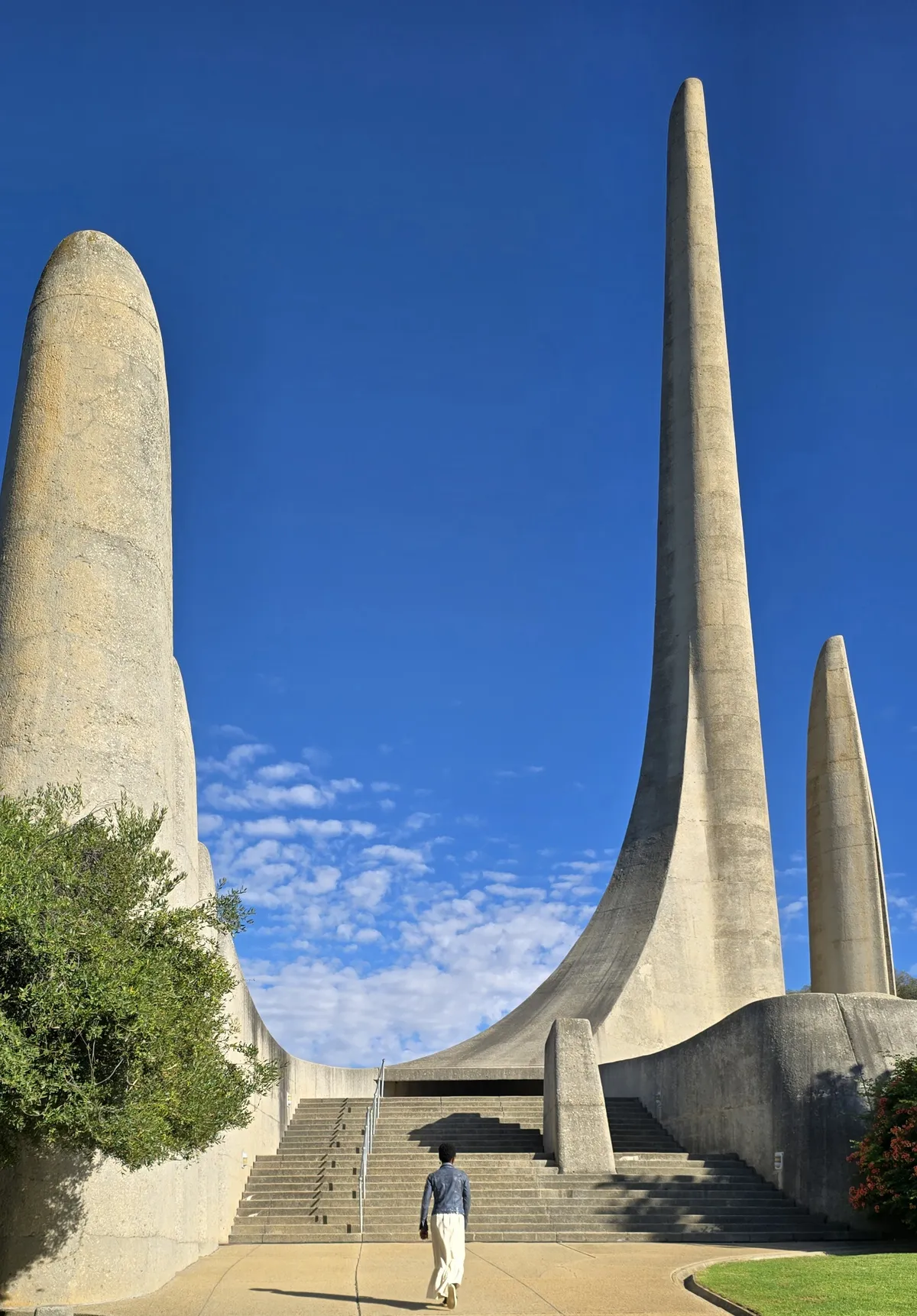
A Monument to Language in South Africa
A visit to the Taal Monument in Paarl made me think differently about language, identity, and what travel can reveal about a place.
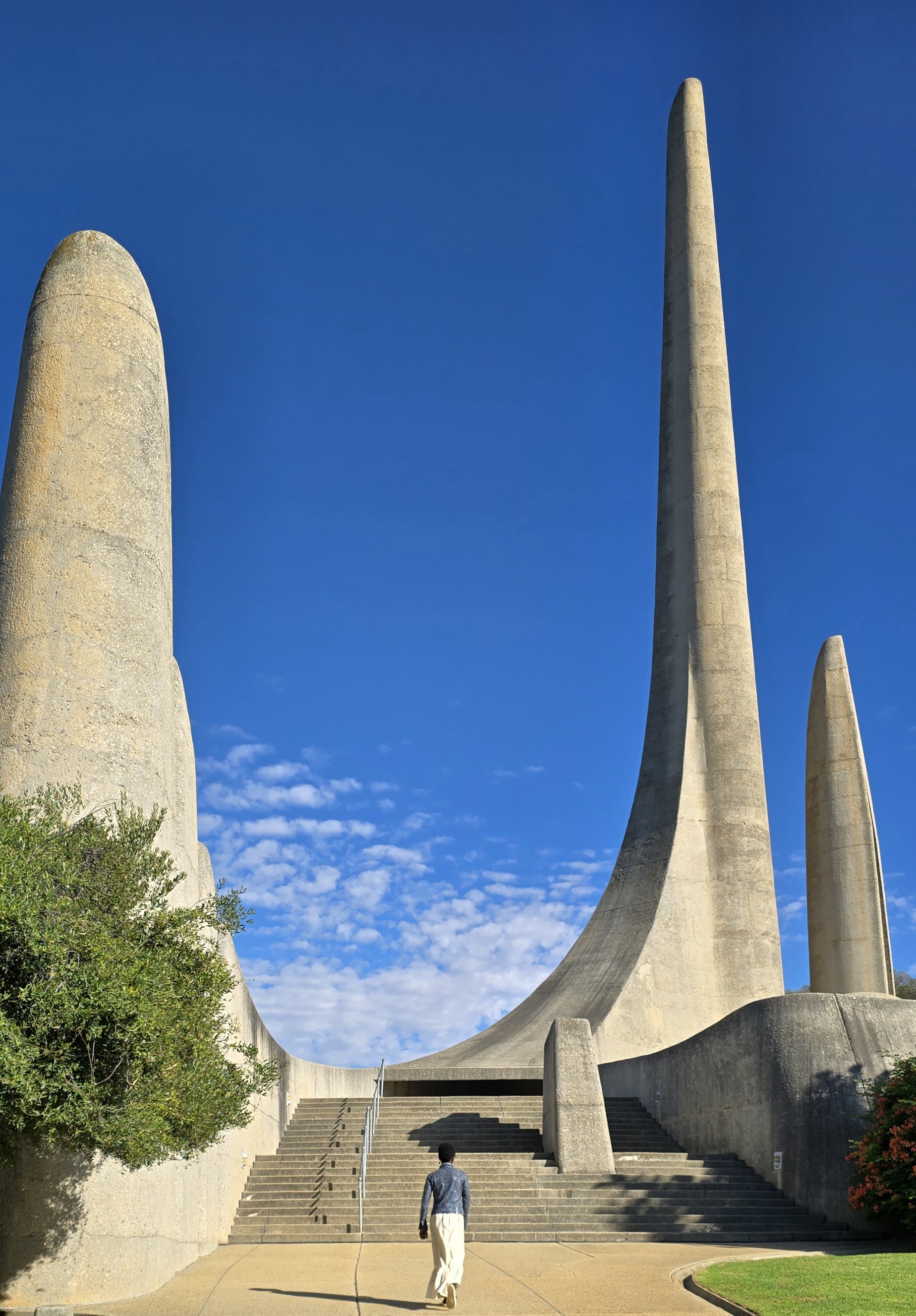
One of the memorable stops during my time in South Africa wasn't a vineyard or a restaurant.
It was the Taal Monument in Paarl.
I arrived expecting an interesting piece of architecture and a panoramic view. I left thinking about language, identity, and the stories countries choose to preserve.
The monument was larger than I expected. Standing at the bottom and walking toward it, I felt small in comparison to the curved concrete structures rising into the sky. The design is striking, almost futuristic, especially against the mountains and wide blue sky surrounding it.
At first glance, it's easy to appreciate the monument purely as architecture. But the Taal Monument represents Afrikaans, a language with a complicated place in South African history. That reality changes the experience of being there.
As a visitor, I wasn't trying to arrive at a definitive conclusion about what the monument should represent or how people should feel about it. I was more interested in what it revealed about the country itself. Travel often gives us access to a place's beauty. Sometimes it also gives us access to its tensions, contradictions, and history.
That's part of what stayed with me after visiting the monument.
South Africa is layered. You feel it in conversations, in neighborhoods, in who occupies certain spaces, and in the stories attached to them. The Taal Monument became another reminder that travel is not only about landscapes and luxury hotels. Sometimes it's about standing in a place and quietly realizing there's far more beneath the surface than you initially understood.
And in many ways, those are the experiences that stay with me the longest.
Want more of South Africa? I put together a free guide with everything I wish someone had told me before my first trip, the places, the pacing, the small things that make a difference. Download The South Africa Travel Guide here.
Warmly,
Asaba
