He Gave Us His Name and His Prisoner Number
On Robben Island, history wasn't something I read about. It stood in front of me and spoke.
That morning I finally made it up to Table Mountain.
The clouds had cleared and it was open to visitors. From the top, the view is breathtaking. Cape Town stretches wide beneath you: ocean, neighborhoods, horizon.
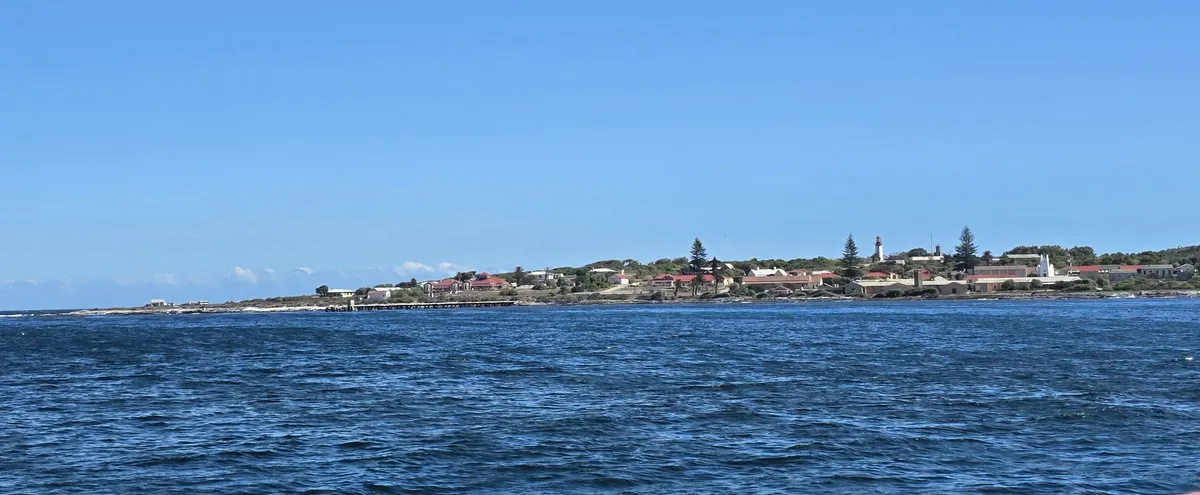
And in the vast Atlantic below, you can see Robben Island.
It looks small from up there. Almost peaceful. Just a quiet strip of land surrounded by blue.
I didn't yet understand the weight it held.
I lingered longer than I should have. The descent took time and I began to worry I would miss the ferry. I grabbed an Uber and rushed to the Victoria & Alfred Waterfront, only to learn the ferry was delayed by over an hour.
I wasn't pleased.
We waited. Restless.
Eventually the ferry arrived. We boarded and sailed toward the island I had admired from above just hours earlier.
This time, it didn't look like scenery.
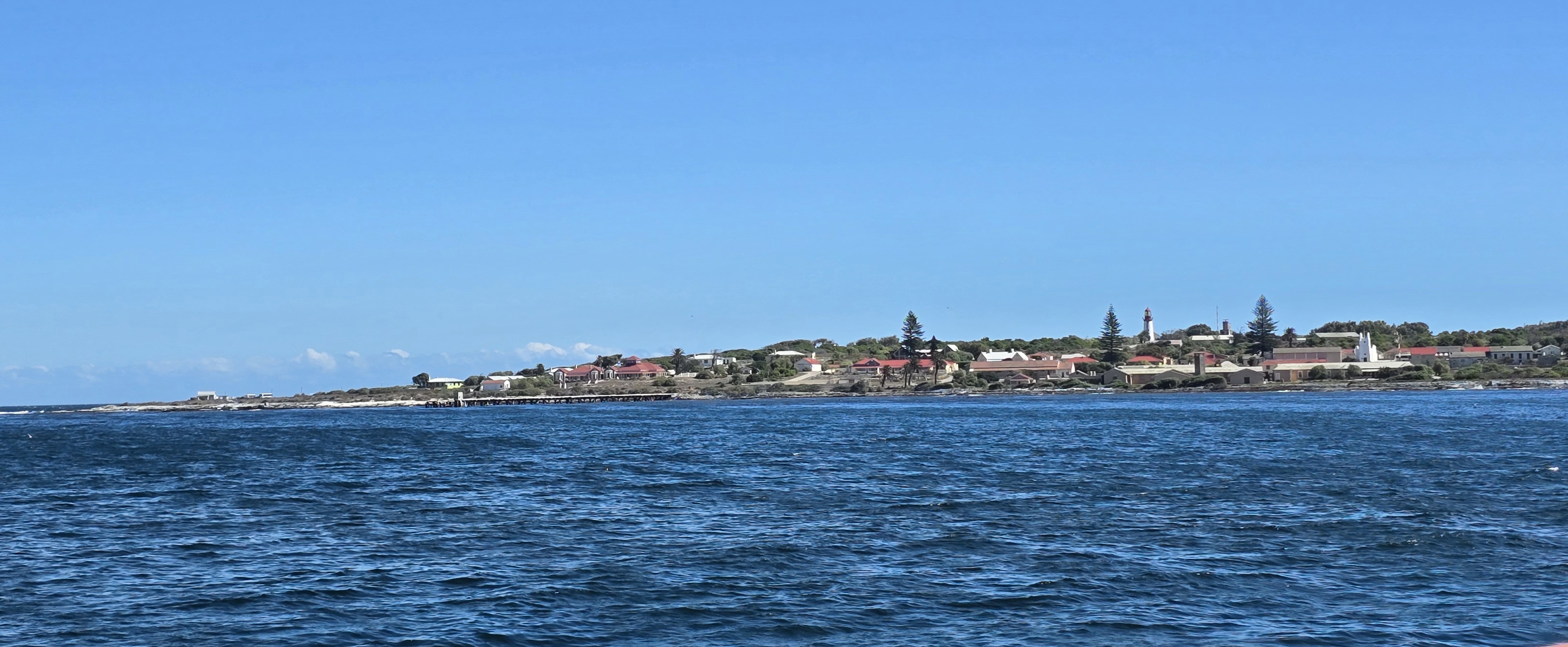
Once on the island, we boarded a bus. A guide narrated while his colleague drove. We stopped at different locations and he explained their significance.
We stopped at the limestone quarry.
It appears almost ordinary at first: pale rock under open sky. But this is where prisoners, including Nelson Mandela, were forced to break stone under the relentless sun. The glare from the white limestone was constant. Dust lingered in the air.
It is widely known that Nelson Mandela's eyesight deteriorated because of those years in the quarry, the brightness and debris slowly damaging his vision.
We were seated comfortably on a bus as this was explained.
They stood there as prisoners.
The contrast is not subtle.
Then we pulled up in front of a building and got out of the bus.
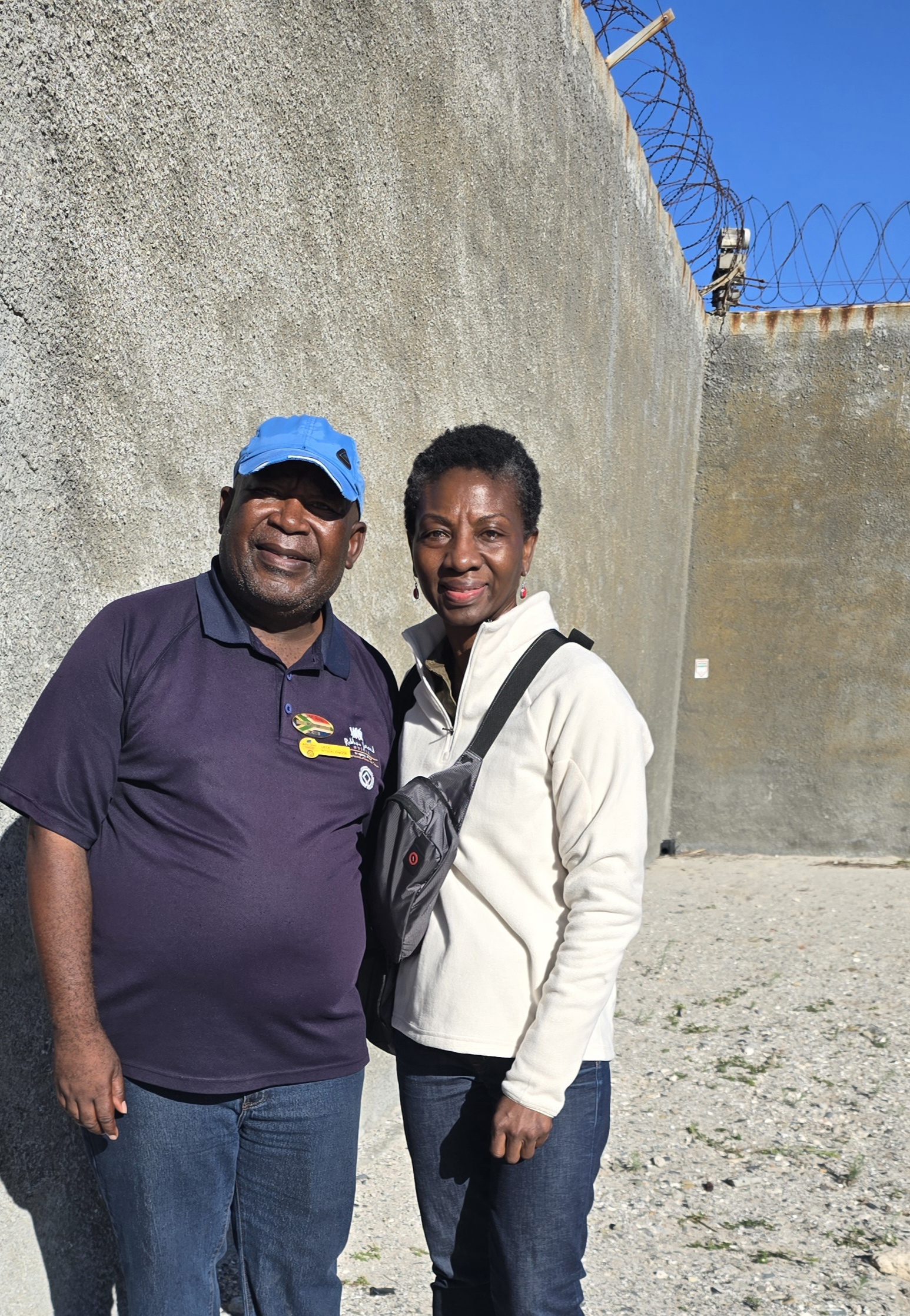
A gentleman stood waiting for us.
He introduced himself calmly. He gave us his name.
And then he gave us his prisoner number.
The air shifted.
We were silent most of the time while he spoke, not because we were told to be, but because we were listening.
He had a quiet sense of humor. He spoke steadily. He held our attention without effort. His story wasn't dramatic performance. It was lived memory.
He showed us where he slept.
He showed us Nelson Mandela's cell.
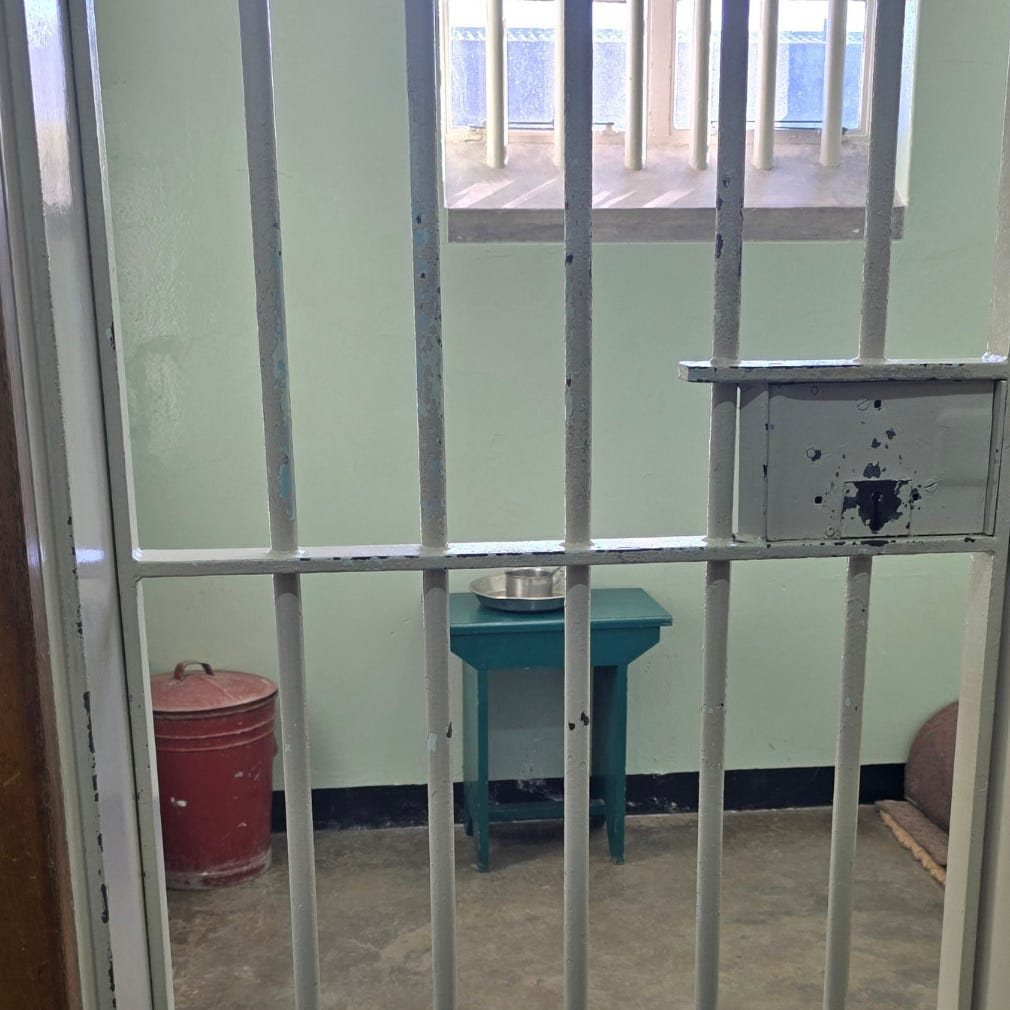
Standing there, looking into that small, sparse room, I felt a heaviness settle in my chest. A sadness I hadn't anticipated. Tears pressing behind my eyes.
These former prisoners are advancing in age. And yet they return to Robben Island every day, to a place that does not hold fond memories, to tell their stories themselves.
That takes exceptional courage.
And extraordinary commitment.
When I took a photo with him in the yard, it didn't feel like a tour.
It felt like standing beside history.
On the ferry ride back to Cape Town, I was quiet.
From the top of Table Mountain that morning, Robben Island had looked small in the vast ocean.
From within its walls, it felt immense.
Robben Island is no longer a prison. It is now a museum open to the public: a place of remembrance, education, and preservation.
Cape Town is breathtaking.
But Robben Island is grounding.
Some places entertain you.
Others change you.
Want more of South Africa? I put together a free guide with everything I wish someone had told me before my first trip, the places, the pacing, the small things that make a difference. Download The South Africa Travel Guide here.
Warmly,
Asaba
